Honda CTX700
INTRODUCTION:
Early in 2017 I experienced a late
mid-life storage crisis and began divesting myself of (many) projects
that were unlikely to be touched, much less completed in my remaining
time on the planet. While this process can be fraught with
emotional turmoil as things that, while not terribly valuable, have
decades of emotional investment in them as "my stuff", it can add some
funds to the part of the budget devoted to fun.
With this boost in discretionary funds I began toying with the idea of
buying a fairly modern motorcycle for another attempt at riding on the
street. While I've often had street bikes, they have also often
never been running, or if running, not ridden because I was more
focused on my race bikes. I suspect I have under 3000-4000 total
street miles since 1971, divided among a Suzuki TS185, Matchless G80CS,
Ducati 350, Ducati 750GT, Cagiva Allazzurra, and (very briefly) a Kawasaki KZ750 four and a
second-generation Kawasaki EX250. So buying a nice condition bike
that I could go and ride when I wanted seemed somewhat novel.
With this idea I then had to figure out what I might want. It
proved easier to do this by a process of elimination of what I didn't
want.
I don't plan to tour or do more than out and back on the same
day. I won't be carrying a passenger. I've got no desire for big/fast
motorcycles on the street. Going fast is much safer/less scary on the
race track, and while modern sport bikes are often very tractable why
spend money for horsepower (that may result in higher insurance rates)
that is largely unused? The
EX250 Kawasaki seemed to have plenty of power for "just riding around".
45-50 horsepower seems plenty
for a solo rider at reasonably legal speeds who isn't in a tearing
hurry to get somewhere. That's about what my Ducati/Cagiva had
and they were plenty fast enough for me, even on the track.
So that 50ish horsepower upper limit eliminates a lot of potential
purchases.
Next, what type of bike? Adventure tour street bike with dirt
bike styling, a moderately serious dirt capable dual-sport,
"universal/standard" or sportbike?
From my house in San Francisco it is roughly 60 miles to anywhere that
dirt riding is possible so I don't see much need for the dual sport,
and I'm not keen about riding off road by myself, or not having some
way to get home if I break the bike. Anyway, I've still got some
vintage MX and trials project bikes for any dirt riding I want to do.
After 40 years of on again/off again road racing I find that I now
don't
deal well with a road race crouch/clip ons. The bar pressure on
my hands makes them numb after a short time, and my neck/shoulders are
not very flexible so it is difficult when leaned forwards to get my
head up enough to make it easy to see around a corner. There's a
fair amount of highway that has to be covered to get to anywhere fun to
ride, and that can get tedious on a sport bike.
Since I've got dirt bikes I don't see much reason for an ADV-styled
bike. If I want a "universal/standard" bike for the street why
have it styled like a dirt bike? Front fenders close to the tire
do a better job of keeping rain off the rider than a high fender.
Hmmm, I seem to have eliminated a lot of potential purchases. So
I looked around to see what appeared technically interesting and/or
appealing and to my surprise (since a lot of modern motorcycles don't
interest me much) I found something.
The Honda 670cc parallel twin with the top end leaned forward 62
degrees from vertical.
With 45-48 horsepower, a flat torque curve and a 90 degree
crankshaft
phasing it seems similar to my Ducati twins. Much of my road
racing has been done on big singles/twins and I like the power delivery
of those engines. The siamesed intake and exhaust systems and
undersquare bore/stroke aren't great for big power, but I'm not looking
for big power, I'm looking for "sufficient" power delivered in a
friendly fashion. A plus is the engine appears to be pretty
understressed and it should last a long time. It gets very good
fuel economy and with the "not very sporty" engine design valve
adjustments are done with screws instead of shims, so it should be
fairly easy to maintain. It is also going to be
difficult/expensive to get any more power from it, so I think I'll be
able to avoid a big/expensive engine modification project that would
keep me from riding it.
Something that interested me is the Honda Dual Clutch Technology (DCT)
transmission that is shifted either by ECU control in Drive or Sport
mode or with paddles/buttons in Manual mode. It does add about
10-15 pounds to the engine for the extra clutch and parts, and also
MANY pages to the OEM service manual. However it appears to be
robust and largely trouble free. I've read comments from many
people who have bought the DCT bikes that they like them enough that
they have no intention of going back to a manual clutch/shift
bike. Some people take the stance that "real motorcyclists" shift
for themselves. Good for them, but I don't see them converting
their bikes from electric start to kick, or changing the electronic
ignition/EFI to points and a carburetor, so that reasoning seems a bit
suspect to me.
ABS is also available with the DCT and it is reported to work well.
There are four versions of the Honda - the NC with ADV styling with the
longest suspension travel, the S that is more "standard" on the styling
and a little shorter suspension, the CTX that is kind of an odd
sport/tour/cruiser design, again with a little less suspension travel,
and the Integra which is a motorcycle/scooter cross. The S and
Integra are not sold in the USA, so that leaves the NC and CTX.
But the NC has the ADV styling which, while it is a reasonably
attractive looking bike, doesn't do much for me. That leaves the
CTX as the remaining choice with its mild to moderate cruiser styling.
I can't say that I've ever had much time for the cruiser/chopper
subculture/bikes since taking a spin on a lightly chopped 500 Triumph
with sprung hub in 1971. It seemed like a backwards step to make
a bike worse handling, more poorly suspended, and with less lean-angle
ground clearance. So at first look I was wondering if I had any
viable options left. A second look showed I did.
One thing I've found nice about the Internet is that I have immediate
access to OEM parts books, which has made a lot of my researching of
different bikes a great deal easier.
Between some information on line and the parts books I learned that the
CTX was not as cruiser-ish as it looked. The wheels, brakes,
swing arm, rear rocker and links, fork tubes and sliders and the main
frame, as well as the powerplant are the same as the NC and S
versions. Those bikes get different damper rods/fork springs and
somewhat longer/longer travel rear dampers for more suspension travel,
but those parts are easily swapped around so if you wanted to make a
longer travel CTX or a shorter travel NC there isn't much to change.
The wheels are the same size as late 1980s/early 1990s 600/750 sport
bikes so there is a good selection of sport tires if those are
wanted instead of something biased towards touring. The
conventional damper rod forks are 41mm. Both front and rear
suspension appear to be "budget level" and lightly sprung but the forks
are reported to be much improved by Cartridge Emulators and different
springs, and a good mid-level aftermarket damper (and stiffer spring)
on the back helps a significant amount. A CTX owner who rides a
LOT that I
talked to about suspension had emulators and an NC-spec
(longer/longer travel) Ohlins installed on his bike and he told me his
enjoyment of it went up 10X. Sections of pavement that used to
have him slowing by 20mph are now taken in comfort with no speed
reduction, and the ride is much more plush but still well controlled.
These Hondas make me think of the older Tonti-framed big-block Moto
Guzzis. They started with the same basic bike, and then you got
to decide
how to clothe it -- dress it up as a tourer, sport/tourer, standard or
sport but the bike underneath is pretty much the same in any
guise. If the Integra with its scooter-style frame is dropped out
of the comparison Honda has done the same thing with the NC, S and CTX.
The chassis numbers (rake/trail,
wheelbase, etc) on the Hondas
are certainly in the ball park of the street bikes I've had (and some
of them have worked well enough for me on the race track too).
I'm looking for a street bike, not a race bike so I don't need
something that lets V. Rossi win a MotoGP.
That leaves the CTX styling as a last possible sticking point. I
have to admit that the more time I've spent looking at photos of them
the better I've liked the looks of the bikes.
But you might ask "Michael, what about the cruiser riding
position?" Ahh yes, what about it?
I've followed the Feet Forwards (FF) design concept for several decades
and have been slowly working on a track FF project as you can see
elsewhere on the website.
Track FF project page
So if I look at the CTX as a "somewhat FF'd" bike, rather than a
cruiser, it becomes more acceptable to me. That may be a spurious
distinction, but as long as it works . . . It won't have as low
of a seat height (the engine is taller above the output sprocket and
being long the rider needs to be above the engine, not behind it) or be as light or as powerful as one of Dan Gurney's Alligator FFs, but
it looks to me to have the most potential as a base for an FF of any
recent production motorcycle (I'm deliberately excluding the
maxi-scootersm some of which have been converted by Royce Creasey).
So I'm going to see what I can do to skew the Honda farther towards the
FF
end of the spectrum.
With the shared parts I could have easily started with a DCT/ABS NC if
one had come along with lowish mileage at a good price. A CTX or
NC with trashed cosmetic panels making the price significantly less
expensive would have been very nice, but I didn't see one. Take off
the bodywork on the two models and the difference that is least easily
changed is the
angle of the seat subframe, which on the NC continues up at a steeper
angle than the CTX does.
A member of the CTX700 forum who lives about 30 miles away mentioned
that he had a bike and was going to put it up for sale. He's the
original owner and has kept the bike garaged. The
price was reasonable and a deal was done.
In the space of a couple months I went from "I've got too many
projects sitting around costing me money" to "look, I've got a very
nice practically new bike that I can actually ride and some space in
the garage for it!"
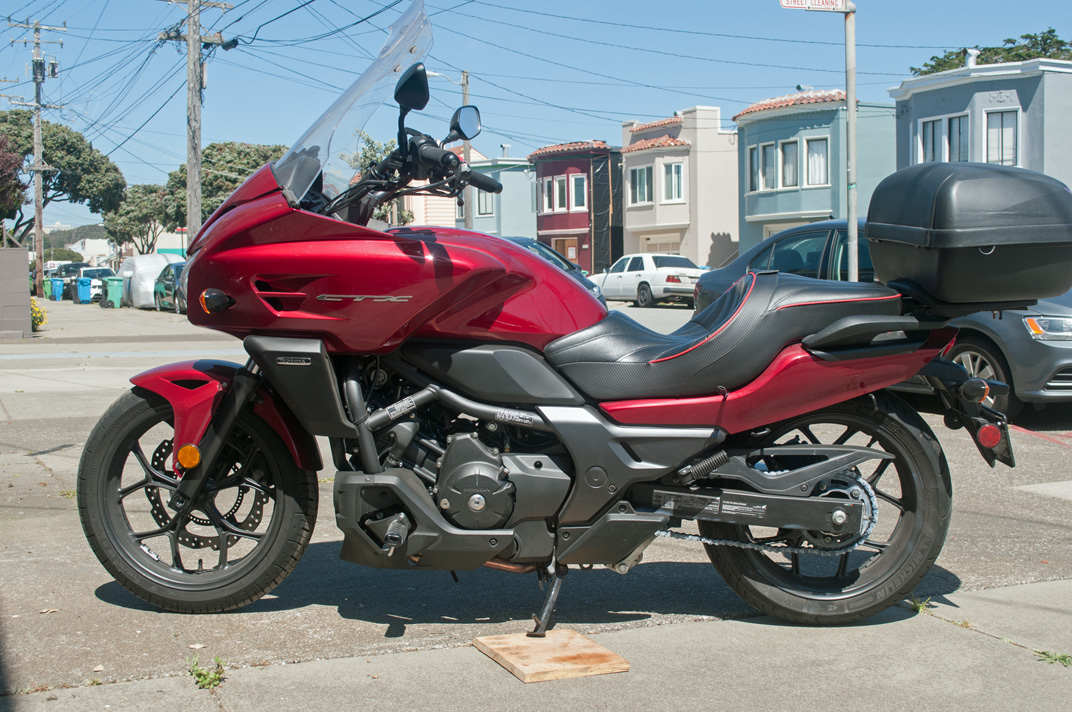
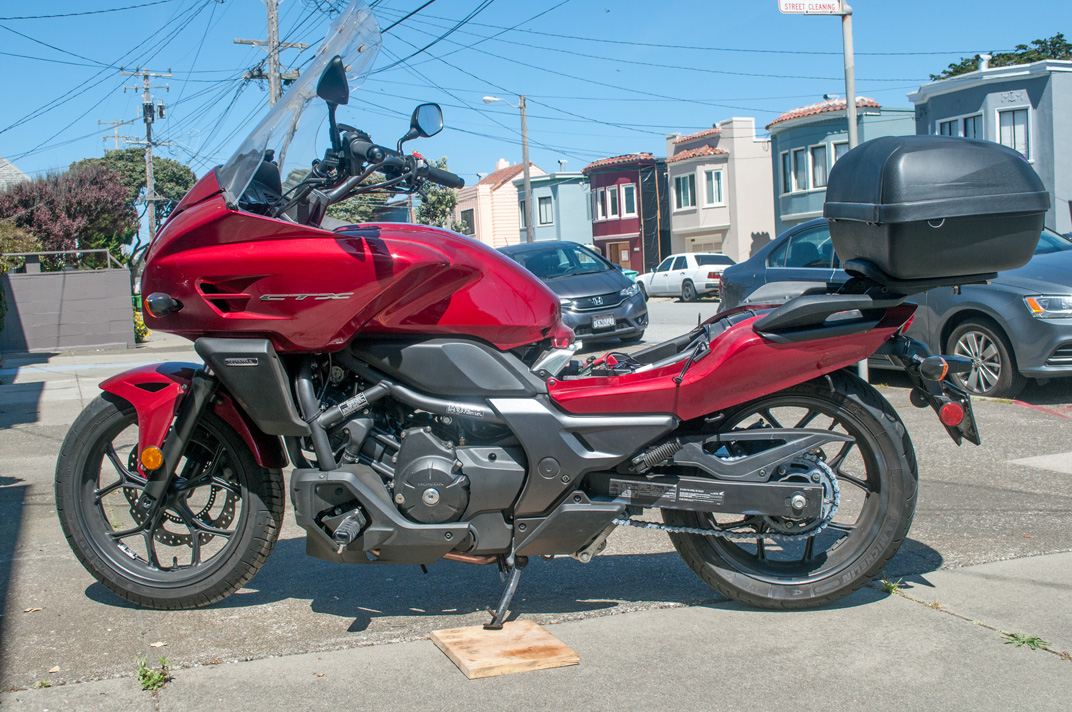
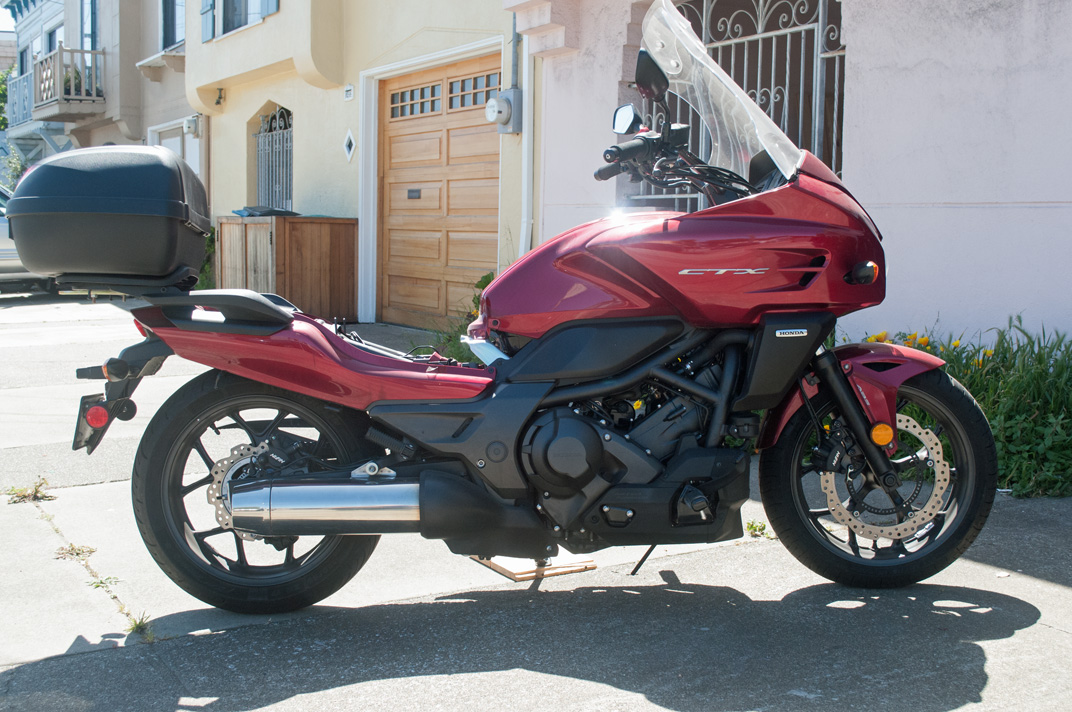
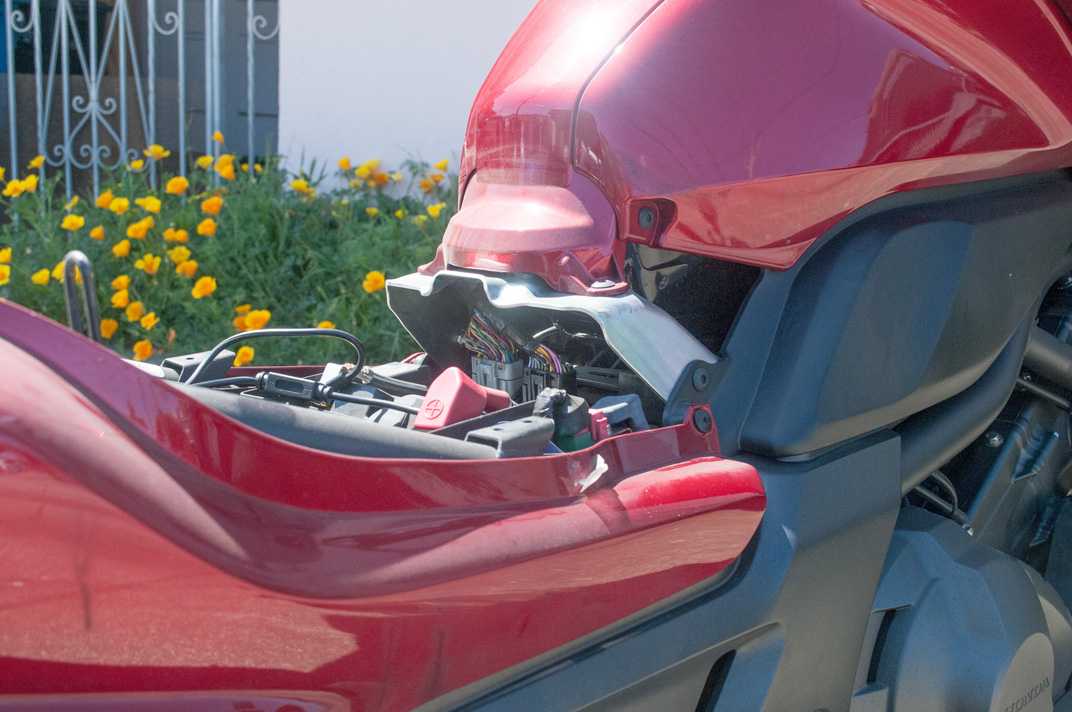
MY CTX :
As purchased in April 2017:
2014 CTX700 DCT/ABS w/fairing model
10,000 miles
24" Cee Bailey windscreen
Low-profile Corbin seat
Battery Tender installed
Honda Rack with 55L top case
Two years left on extended warranty
So it is a clean, low mileage bike with a few modifications to make it
better for commuting. The original owner eventually found he
wasn't riding it enough to justify keeping it. He had any service
(not that much was needed) done at the dealership where he bought the
bike.
I could leave it just as it is and ride it around, or at least I think
it might be possible to do that. I have trouble leaving
motorcycles alone, which is probably why I've had so many of them that
didn't run (but a lot of them didn't run when I got them so it hasn't
always been totally my fault!). With this bike I'm going to try
hard to have as many modifications as possible be of the bolt-on type
that don't force the bike into extended non-operational status.
I'd like to ensure that I can get out for a ride or two every week.
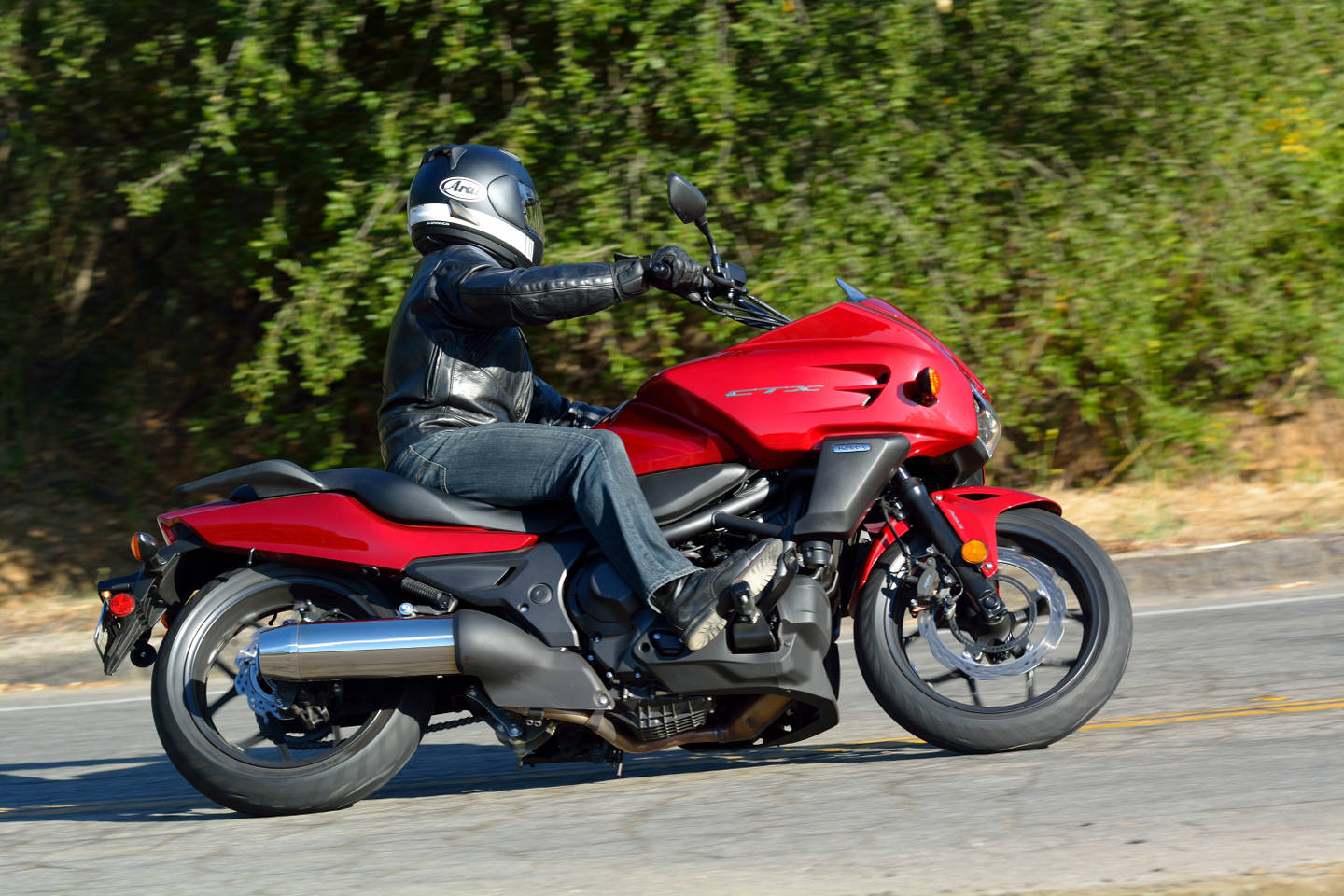
 My
CTX 700 as purchased
My
CTX 700 as purchased
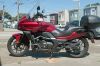 My
CTX 700 as purchased
My
CTX 700 as purchased
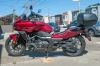 My
CTX 700 as purchased -- without seat
My
CTX 700 as purchased -- without seat
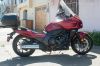 My
CTX 700 as purchased -- without seat
My
CTX 700 as purchased -- without seat
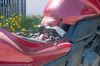 My
CTX 700 as purchased -- under the seat
My
CTX 700 as purchased -- under the seat
FIRST RIDE REPORT
Just completed my first ride on the CTX
I just got back from my first ride of about 90 minutes on the CTX. The
tall Cee Bailey screen height didn't seem bothersome and the screen
seems effective, but I still don't like the looks of it.
The DCT is very effective for launching away from a stop light. The DCT
was fine to ride with. I did some manual shifting and tried both drive
and sport modes and doing a manual override while in auto mode, and
while they are all different, they were all fine. There's plenty of
power for my needs/wants.
I've got to adjust the bars/brake lever because the bar is a bit high
and the lever low so I was able to use only the finger tips and my hand
was getting tired. An adjustable lever may be in order. My thick RR
gloves and possibly a thick hand grip may contribute to the issue. The
front brake seemed OK but not hugely powerful, maybe that will improve
when I can get a better grip on it.
The rear brake doesn't seem very effective and there was something that
my right ankle wasn't happy about, I don't know if it was the peg
position or just an old ankle.
The engine feels harsher than I'd expect from a 90 crank with balance
shaft, I guess that's the vibes left in for the pseudo H-D experience.
But it is mostly noticeable in Drive when the trans is shifting up very
early and RPMs are staying very low. I'm not sure if the engine is
actually lugging or not, but that is the impression. On the other hand,
I doubt that Honda would have the shifting programmed to be so low that
the engine was going to be unhappy. Sport mode holds the gear longer
and to a higher RPM so I'll have to experiment with staying in S
instead of D.
The suspension doesn't seem very good, with a harsh road feel over
cracks/ripples and jolting on bigger bumps (recessed man hole covers).
Money will definitely get spent to fix that.
I'm not sure if it was the Aerostitch suit (which I'd never worn
before) combined with my jeans being bunched up, or if there's some
corner of the back tank cover and/or a raised spot on the Corbin seat
but while I wasn't uncomfortable I could tell that a spot on my
upper/inner right thigh was getting some noticeable light pressure.
The bike feels very light if doing some swerving back and forth or
leaning in slow corners. I'm going to need some parking lot practice, I
stopped off in a few and did some circles, and I tried dragging the
rear brake a little as I'd seen that mentioned as a technique for a bit
more control.
The FF riding position was fine, but I think when I come to a stop I'm
dropping my left foot straight down from the peg (as normal) except
that peg is farther forward so there's less support stability. I'll
have to get used to pulling my foot back some.
The local Vultus owner stopped by this morning and we had a nice visit.
I found the bike very nice to sit on (somewhat lower seat height than
the CTX). I liked the OEM back rest a lot, and I think the floorboards
were more comfortable and better positioned than the CTX peg.
His bike has had the rear brake converted to LH grip lever (he also has
a Honda Silverwing maxiscooter) and the foot pedal deleted, and I'm
going to order the parts to do that right away as I'm not keen on the
position of the rear brake pedal. The Vultus looks a lot better in
person than in photos, though it will still help if you like
manga/anime styling. He mentioned his biggest adjustment was getting
used to the large offset between the steering stem and handlebar grips
making it easy to oversteer a little in slow turns. I may have been
experiencing some of that on the CTX.
It was strange to be riding on the street and it will take some getting
used to. But I've no big complaints about the bike other than the
niggles mentioned above, and hopefully after addressing them the next
ride will be an improvement.
Now that I've ridden it once in the state I received it I can start
taking useless trim panels off and making other changes. :-)
THE (PROPOSED AND/OR ACTUAL) PLAN
FOR MODIFICATION:
As the plan is implemented
I'll edit this section to include the results.
The
first item on my list is to get more familiar with the bike. I've
done a lot of reading on the Honda 670s (I bought both NC and CTX OEM
service manuals) and I've collected a lot of photos of the bikes.
I like to modify photos (I use the free paint.net program which does
most everything I could want to do, though I often do some enhancement
first in Photoshop Elements) to investigate "what if" scenarios.
I've found
a few photos of the bikes with bodywork removed to expose what is
underneath, but some of those have been of the NC which has a different
location for the battery, fuel tank, seat mounts, foot rests, etc when
compared to the CTX. So removal of the bodywork and getting good
side/front/back and detail photos will be part of the familiarization
process as will be gathering measurements. Usually I'll put a
scale in the photos so I can have a standard dimension to adjust the
sizes of the photos to match when mashing them together. I also
want to weigh the bike to determine the unladen fore/aft weight
distribution with a full fuel load. The NC appears to be slightly
biased towards the back, but the CTX fuel tank is in front of the rider
instead of behind/below as on the NC so it might be more 50/50 or even
slightly front biased. However, once a rider is added all bets
are off as the position of a rider that may weigh almost 1/2 of the
bike can make a big difference. But being able to determine the
center of gravity (CoG) of the bike without rider will be useful
information. I don't think my shipping scale is of a high enough
capacity to weigh one end of the bike with the rider on board so I may
have to get creative.
After
that (and going riding!) are two items of roughly equal importance:
-
See what parts
drag when leaned over and try to make them stop doing that. This may actually be slightly higher in
importance. I'm
not intending to strafe corners on the public roads but the CTX pegs,
and possibly exhaust, look kind of low to me and I suspect one or both
may drag at an inopportune time. I'd like to avoid having a
tire levered off the ground by something grounding before the tire has
run out of grip. I will collapse the suspension to check ground
clearance as well as clearances at full suspension extension (droop)
and full compression (bump). The goal of making the bike more FF
will mean doing whatever can be done to lower the rider's position, and
part of that process may include lowering the sprung part of the bike
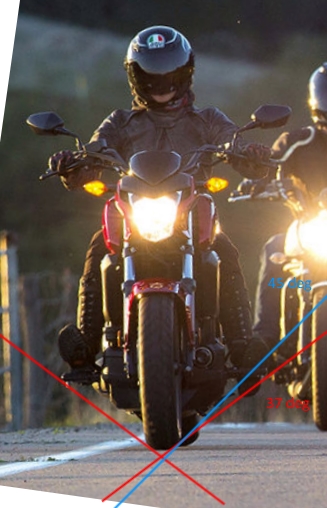
at full bump. Royce Creasey, who has been one of the leaders in
developing the FF concept recommends at least a 45 degree lean angle at
full bump and a 55 degree lean angle with the bike at the normal ride
height, so I'll use those numbers in the checking process. A lean
gauge will be a length of plywood held at that angle (this simulates
the ground) that is then moved to contact both front and rear tires
together. Anything that bumps the plywood before it is up against
the tires needs to have something done with it. I've read of
various people using different length links to lower the back of the
bikes an inch or two, but I'd want to run a simulation on the rear
suspension before making a change like that. Once the data is
collected Tony Foale has some software that gives a lot of output on
the action in the suspension.
 CTX
700 lean angle
CTX
700 lean angle
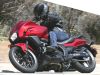 CTX
700 leaned to right
CTX
700 leaned to right
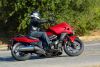 CTX 700 leaned to left
- Address the suspension
inadequacies. As I mentioned above Honda has had to fit less than
top-flight suspension in order to hit their target price. That is
a common practice, but it doesn't help the owner much if the suspension
is not to their liking.
The
standard rear damper (a Showa of
the de Carbon internal reservoir type, also sometimes called an
"inline" or inner piston damper to distinguish it from an external
reservoir type) is
not adjustable for anything other than spring preload. The
suspension
seems to be aimed at lighter riders as those who are more in the 180+
pound range (I am on the + side of that number) find that they have to
add spacers under the spring to be
able to preload it enough to have much available bump travel at a
normal suspension sag position. The incorporation of the
reservoir/floating piston into the body of the damper means that for a
given overall length there will be less internal space to allow damper
rod movement than if there is an external reservoir, connected either
directly to the body of the damper or by a high-pressure capacity
hose. Shorter available travel in the damper for a given wheel
travel
means higher leverages are at work and a stiffer spring must be used
for the same wheel rate. It may be that going to an external
reservoir
will allow a shorter body so length adjustment can be added to the
damper (presuming of course that isn't possible with an internal
reservoir damper). That could be nice to have for making
adjustments to ride
height/ground clearance. There are a lot of choices in
aftermarket
rear dampers so some research will need to be done. A good
$600-750
damper seems to be quite adequate for street use, there's probably
little
justification for going with something suitable for a serious track
machine.
The front forks are
conventional (Right Side Up = RSU) Showa with 41mm diameter tubes and
use damper rods and not cartridges. Damper rods have
velocity-sensitive orifices that with sudden motions can hydraulic
lock, making the suspension harsh. The standard upgrade for this type
of fork is the Race Tech Cartridge Emulator which requires enlarging
the orifices in the damper rod to disable them for compression damping
which is then controlled by the Emulator. Rebound damping is
adjusted with fork oil viscosity. The Emulators can be tuned by
adjusting the size/quantity of bleed holes or the stiffness/preload of
the springs controlling the shim plate, but this does require the fork
springs to be removed and the Emulator fished out, modified, and then
reversing the disassembly procedure. I've found that having to go
through that process makes it very easy for me to install the Emulators
and never try to adjust them.
There are three cartridge damper conversions that I'm aware of that can
be fitted to these forks with some or no modifications. They may
have externally adjustable damping for one or both directions. It
sounds like they can benefit from some detail modifications which is a
bit disappointing for a $6-800 kit. If those modifications
include different pistons that can add $150 or so to the
conversion. That's quite a big jump in price over the Emulators,
but the ability to make adjustments that are never used because of "I
don't feel like bothering" issues may make the monetary savings less
important if the goal is to optimize the suspension.
I have a few other ideas I'm toying with for the front suspension but
they are much more involved and might get away from the "keep
modifications bolt on and don't make the bike unable to be ridden for
an extended period" concept. I'll have to see how they look when
I have more data on the bike.
Next
will be adjusting the ergonomics. The foot pegs may need to go up
to add ground clearance, and I may want to go fore/aft to adjust for my
6' height. The seat surface is much higher than the main frame
rails so I'll have to look both at how much it might be lowered and
also consider making a shorter fuel tank (or relocating it behind the
rider as on the NC700) to
allow the rider to go forward if needed for a better rider plus vehicle
weight distribution. If the rider doesn't go forward a rearward
secondary steering head is probably in order to get rid of the "tiller"
style handlebars required by the distance from the seat to the fork
crown.
I
don't know how many of the body panels are just trim pieces that can be
left off. It sounds like accessing the air filter on a faired CTX
can mean an hour or so of removing a lot of panels and a lot of
fasteners for a 5 minute service item. If the trim actually
provides some protection or serves some other purpose than I'll leave
it in place, but if it is just "there" it may go to a shelf.
Another thought I'm toying with is converting the rear brake master
cylinder to left hand operation instead of a right foot pedal. I
found some information on doing that on an NM4 Vultus, which is a
limited production variant with more changes to the frame. The
person used the master cylinder from a Honda Silverwing "big
scooter". That part is much less when bought new from Honda than
the similar part used on the Integra. Eliminating all foot
controls would make it easier to relocate the pegs if/when that is
necessary. UPDATE 06 April 2017: the SW master cylinder is
on order, as well as an adjustable lever for the front brake master
cylinder.
But
those mods are down the road aways, I can think about them while
dealing with the ground clearance and suspension issues.
Here are some images I've found on the Internet and/or modified as
mentioned above:
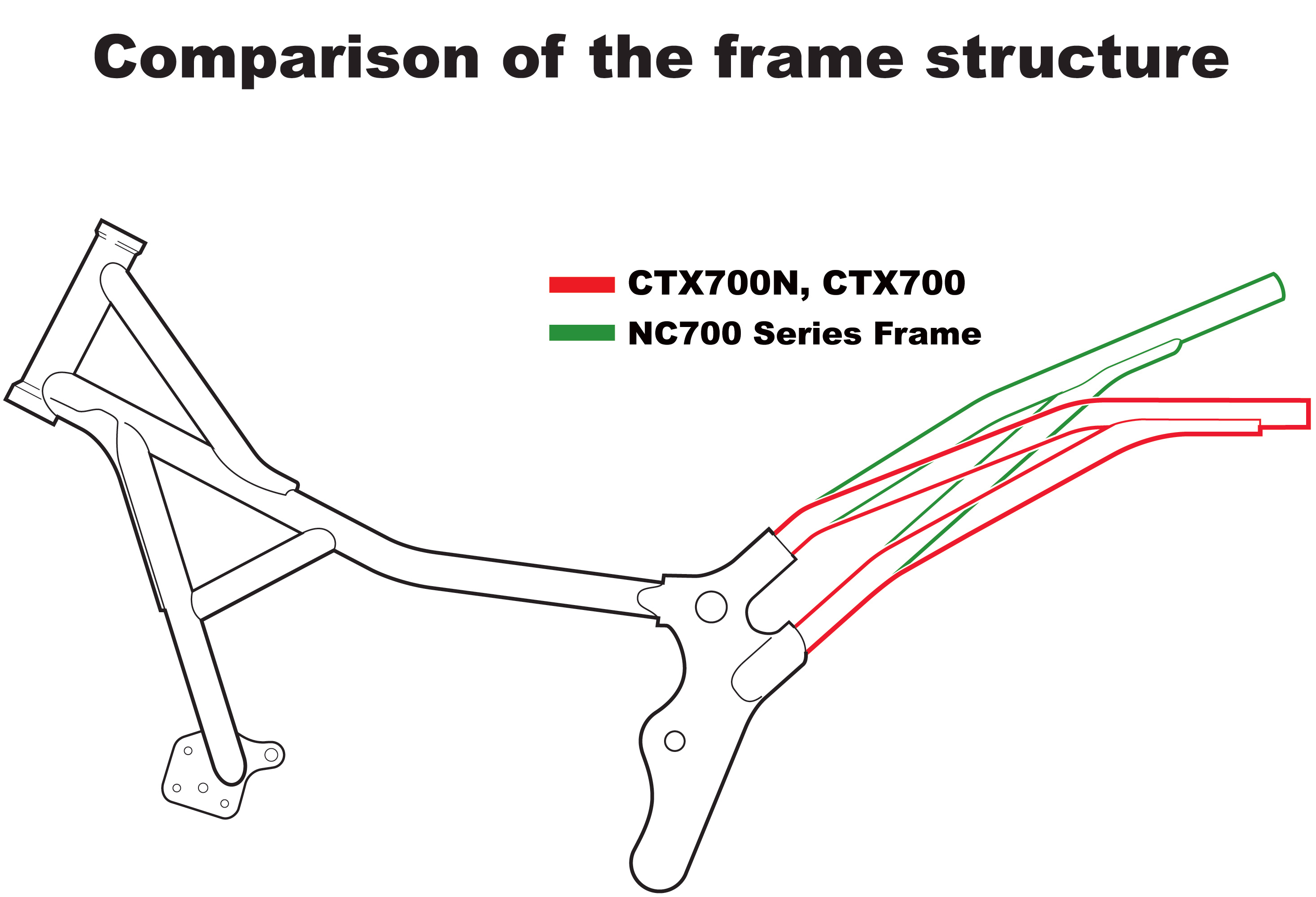
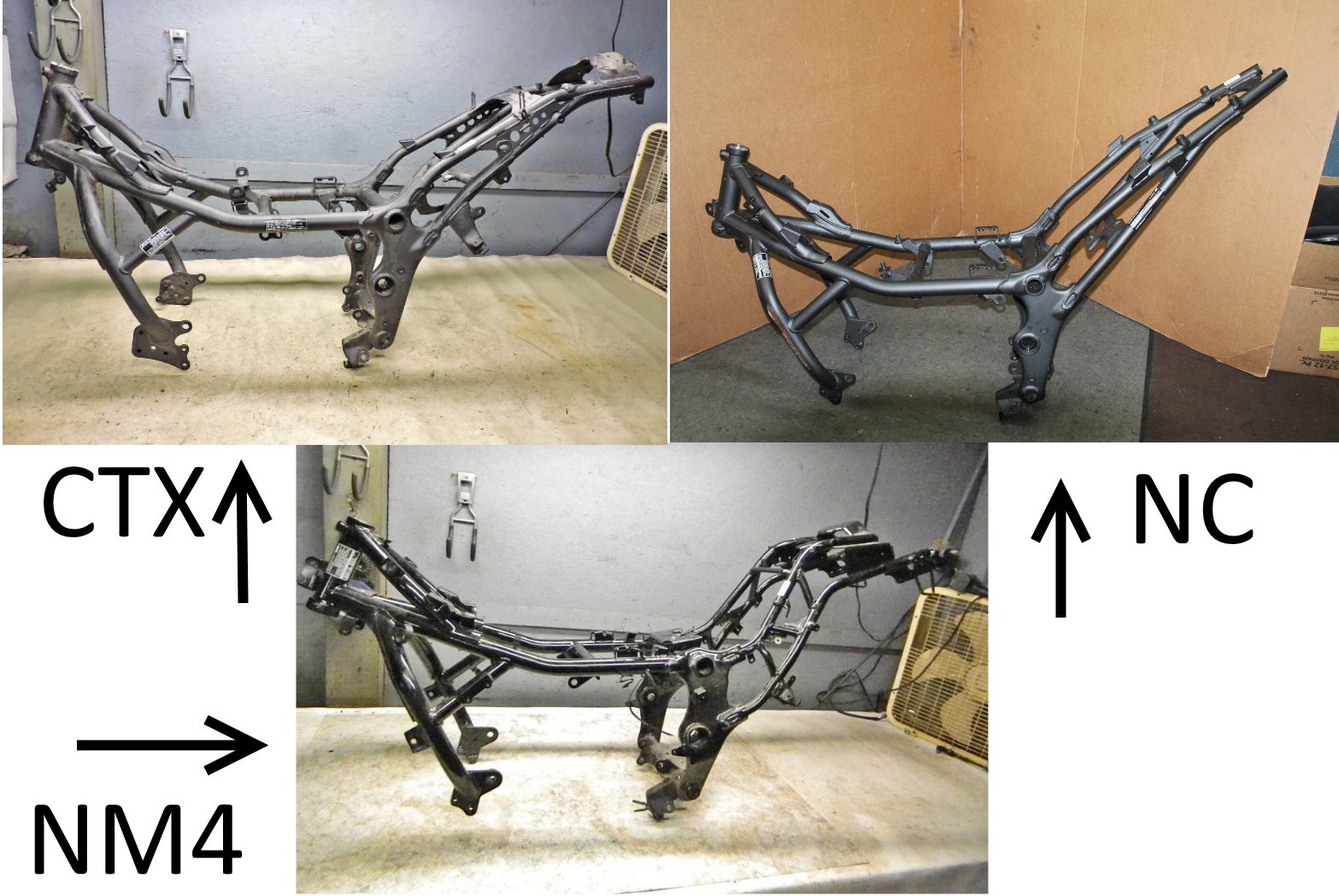
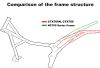 CTX and NC frame comparison
The main frames appear identical, the difference is in the
subframe several inches after it leaves the main frame.
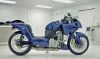 Gurney
Alligator side view
Gurney
Alligator side view
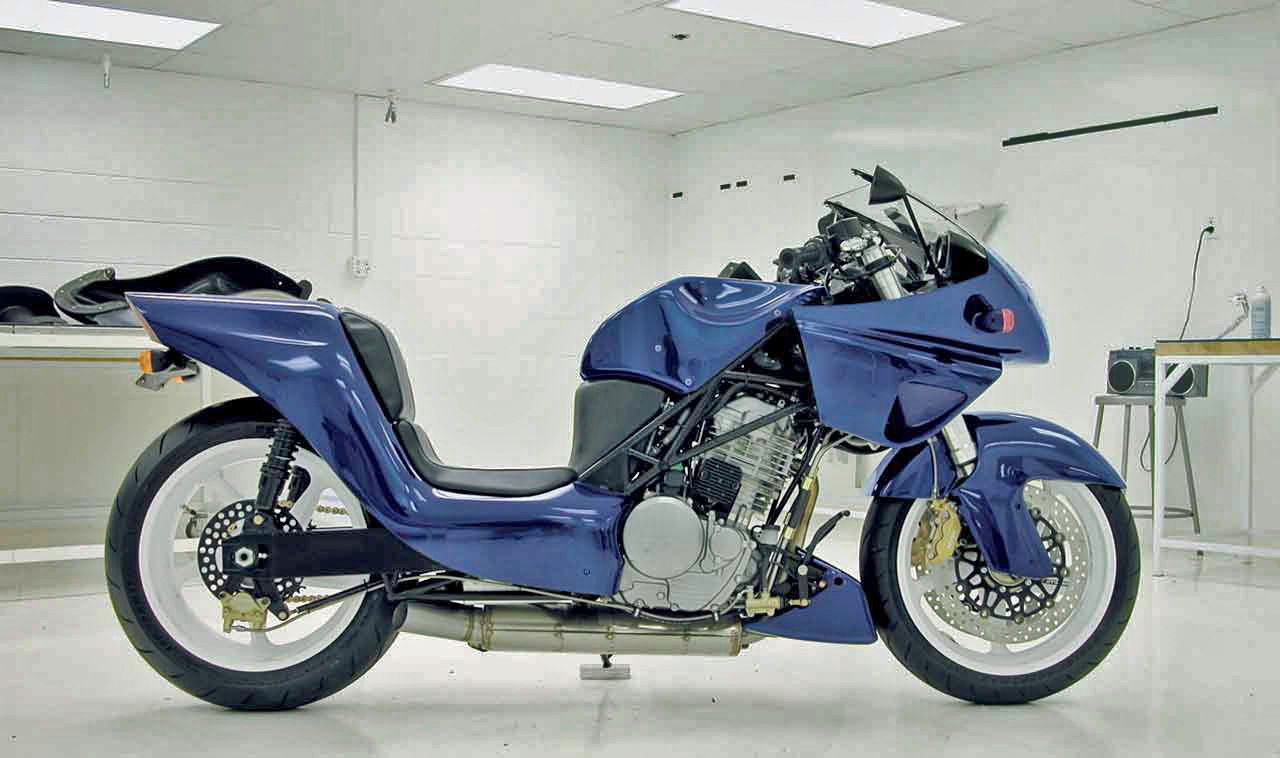
The 18" seat height of this bike is probably not going to happen with a
Honda 670cc twin.
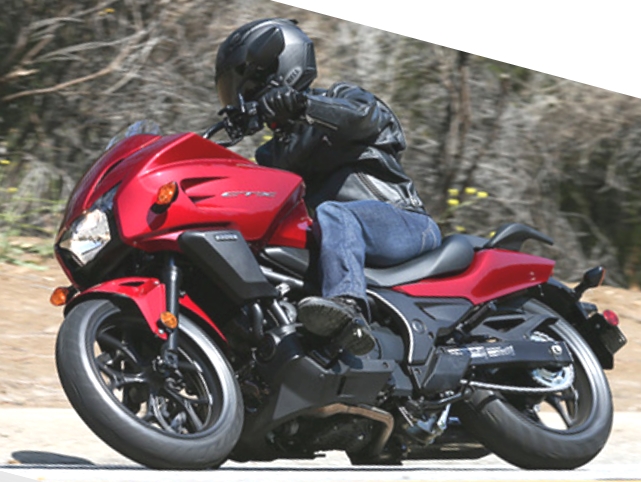
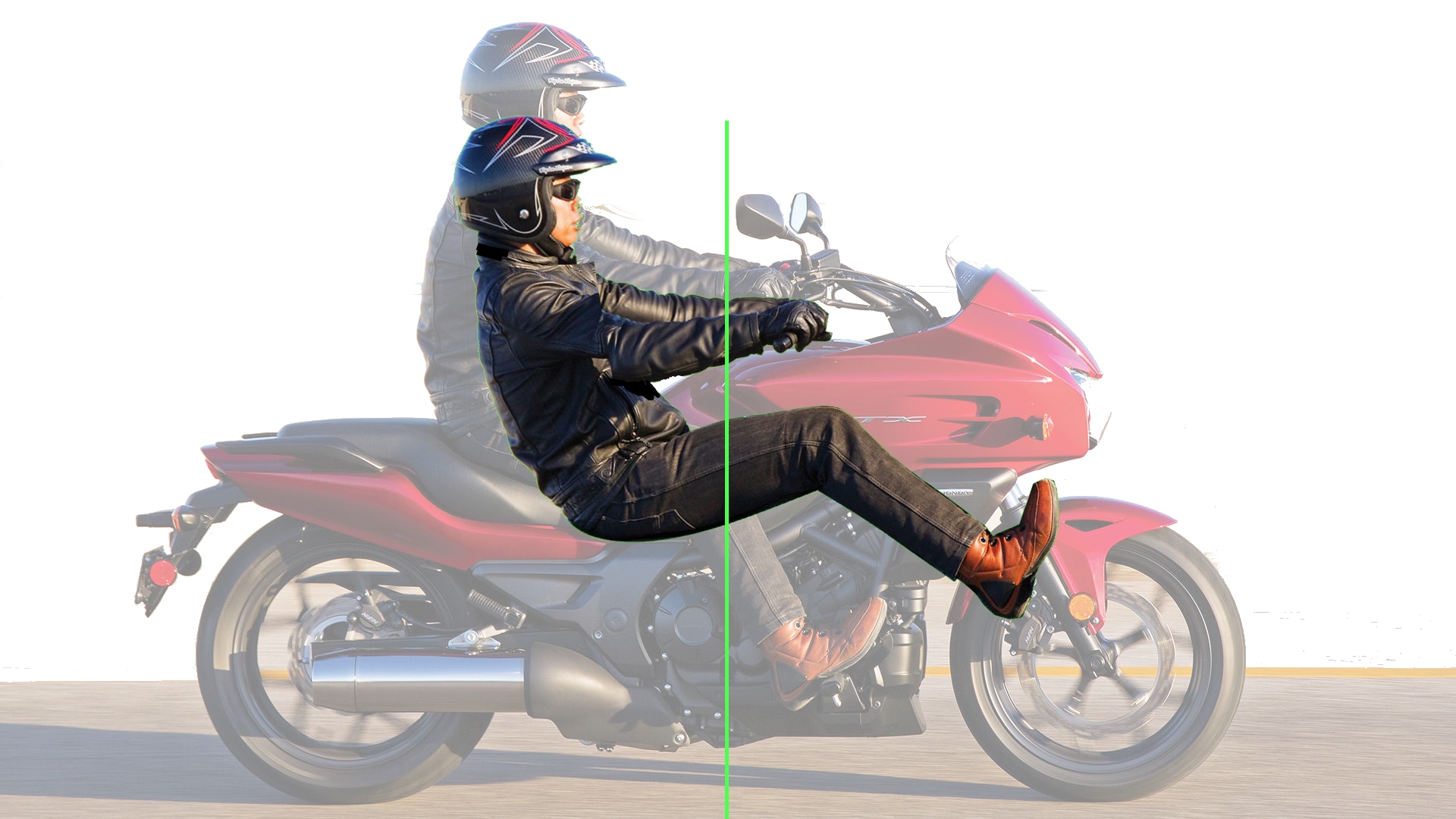
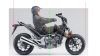
 FF'd CTX
Moving the rider on a CTX into a more FF position -- down as well as
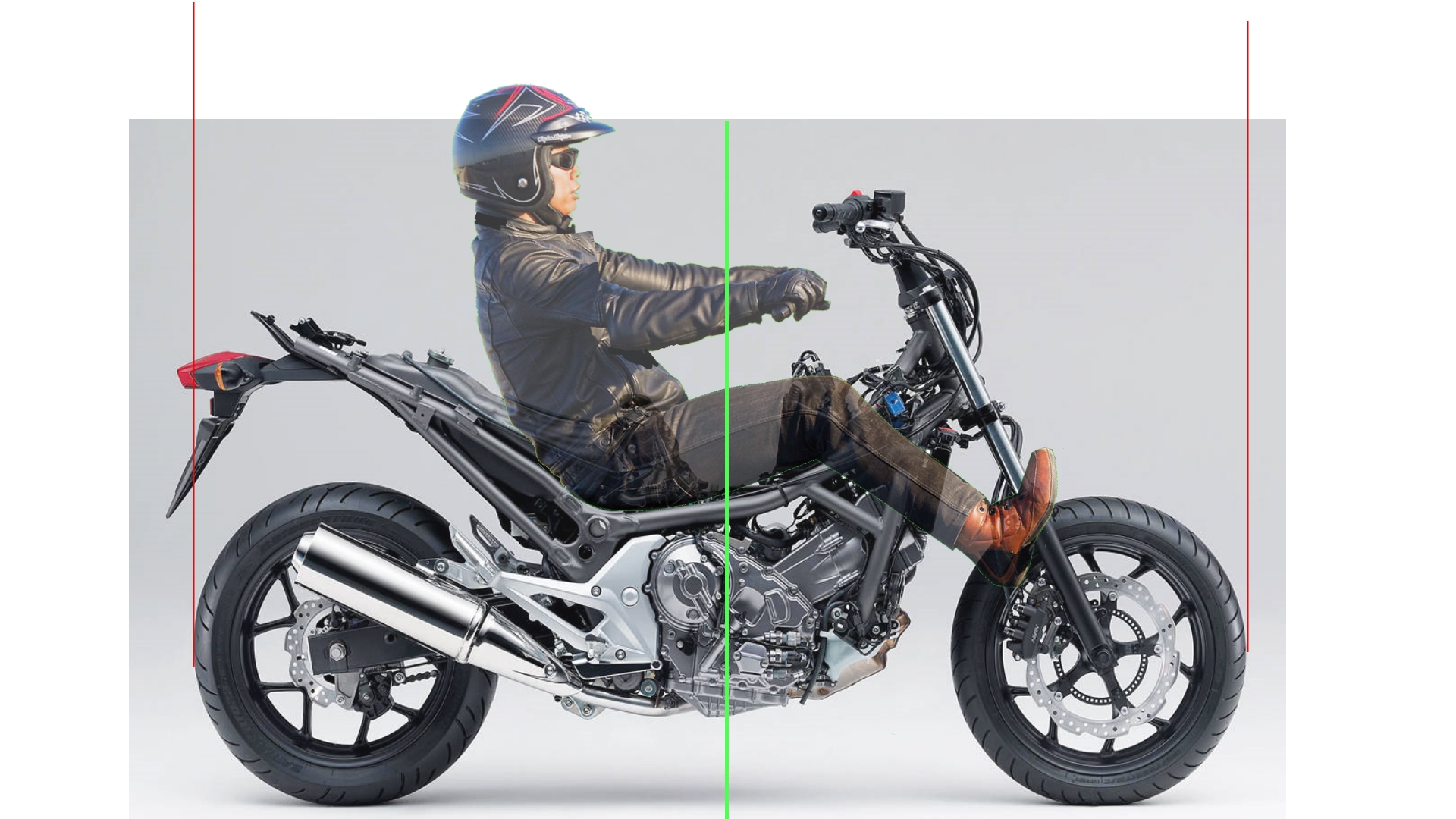
foward.
 FF'd NC
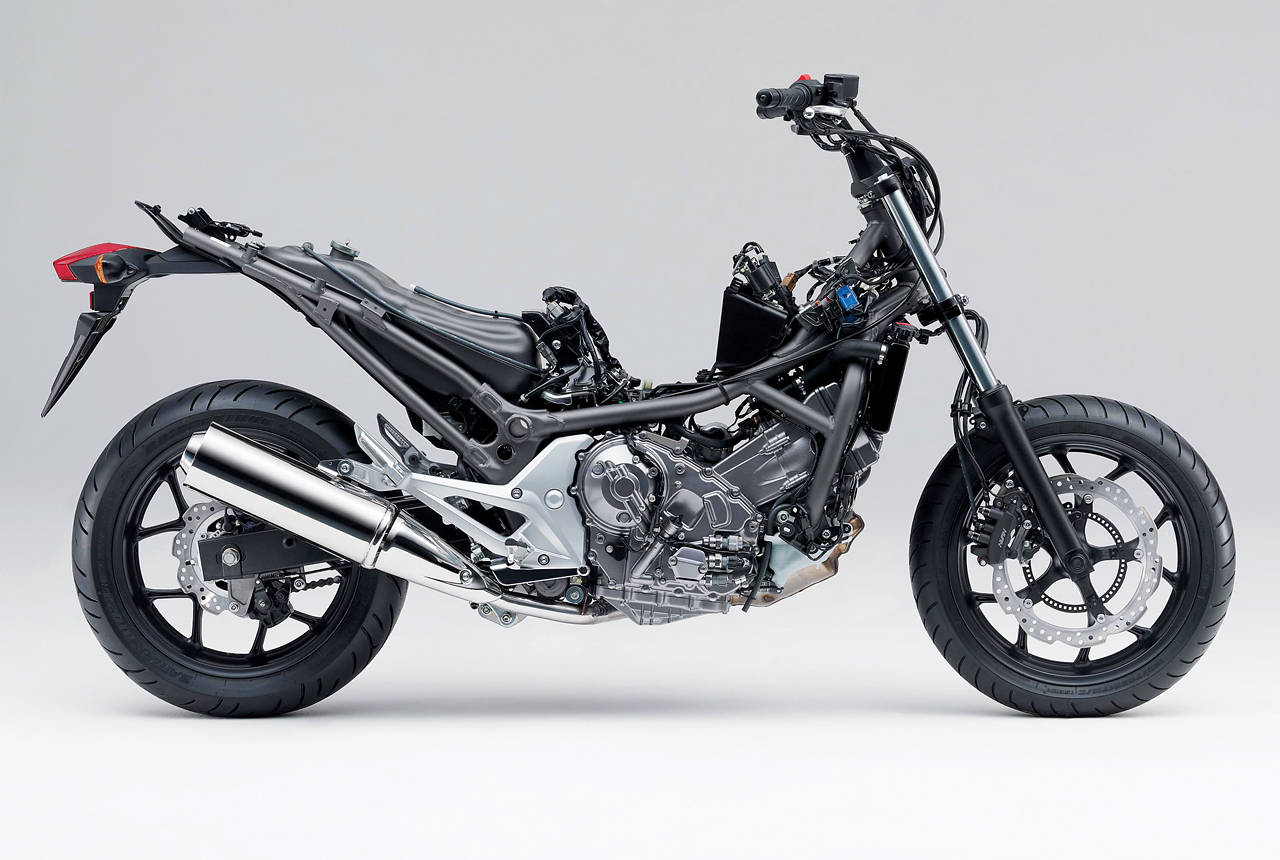
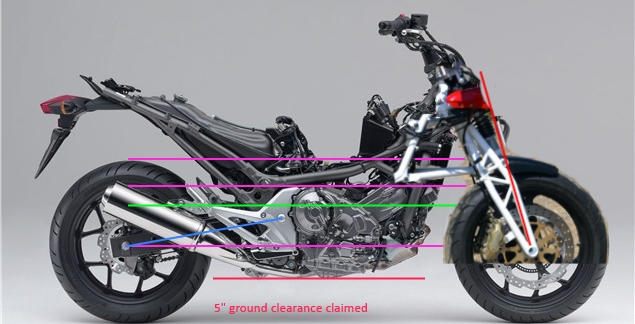
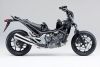 A nice side view of an NC with bodywork removed
Note that the NC has the tank to the rear to leave room for the
"frunk". The CTX tank is located where the frunk would be.
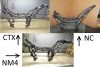 Frame comparison -- NC700, CTX700 and NM4 (Vultus)
The NC and CTX are similar but for the subframe and detail
brackets.
The NM4 has a shorter and more raked-out steering
head and different subframe.
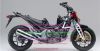 What
if the CTX/NC had a Hossack FFE (funny front end)?
What
if the CTX/NC had a Hossack FFE (funny front end)?
12 May 2017:
I
recently purchased a Mutazu NC700 center stand for my CTX. It
appears to be a close copy of the Honda OEM stand other than they made
the hook for one end of the small spring too small (that was adjusted
with pliers) and don't supply a section of hose to put over the springs
to keep them from scrubbing on the stand.
All of the stands, Honda OEM or aftermarket, are for the NC-X or NC-S
models which use a rubber foot on the stand against the underside of
the muffler on the right side of the bike as a stop.
There's a stop sold by a shop in Japan that provides the OEM NC-S stand
(shorter height than the longer suspension travel X model) that doesn't
look too fancy but they get $40 for it. It is mounted with the M6
bolt that retains the pivot shaft and some people have reported bending
of that bolt. I think the problem is that the only thing holding
the stop in place is that bolt and many people probably just roll off
the stand and let it slam into the stop.
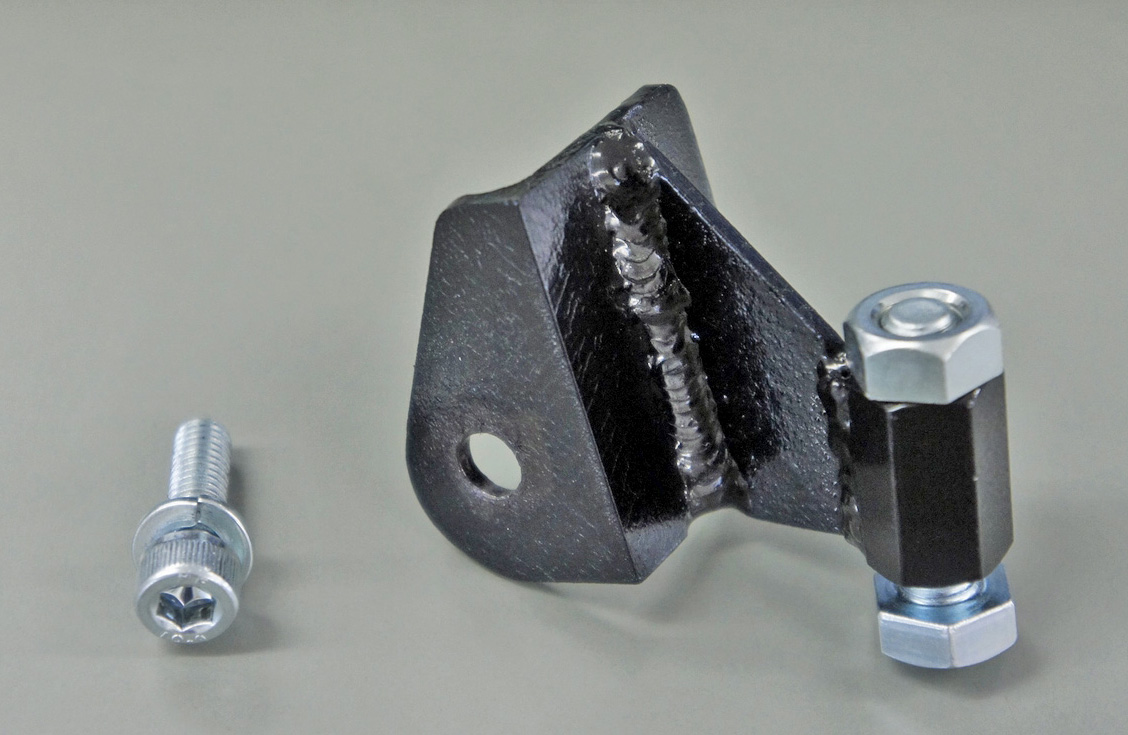
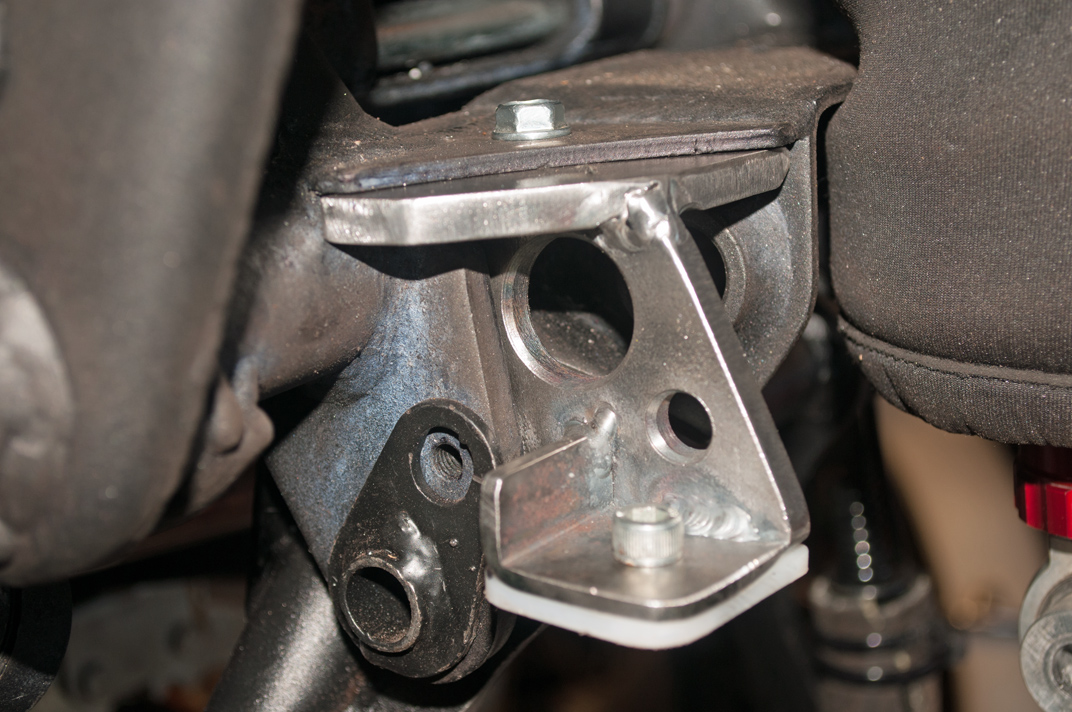
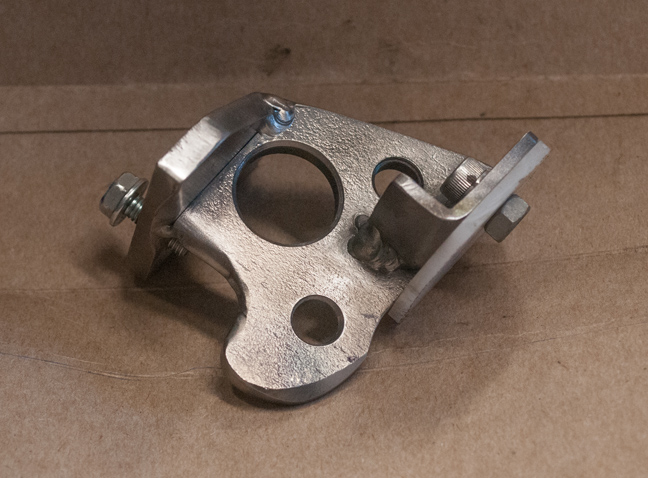
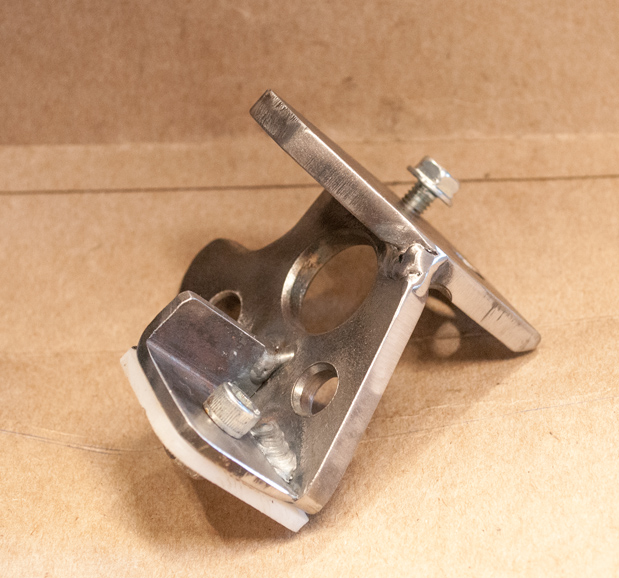
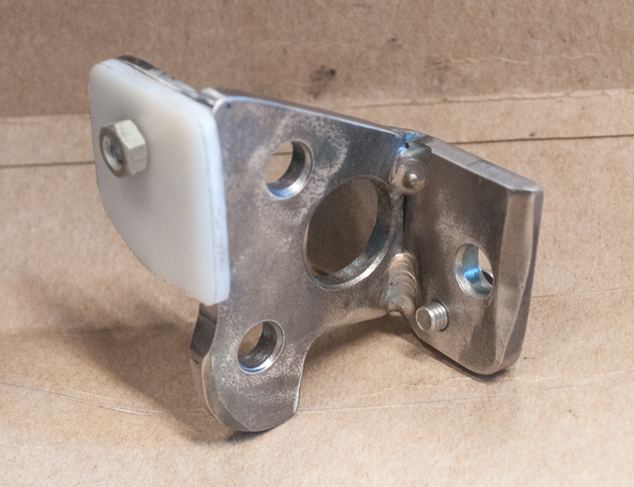
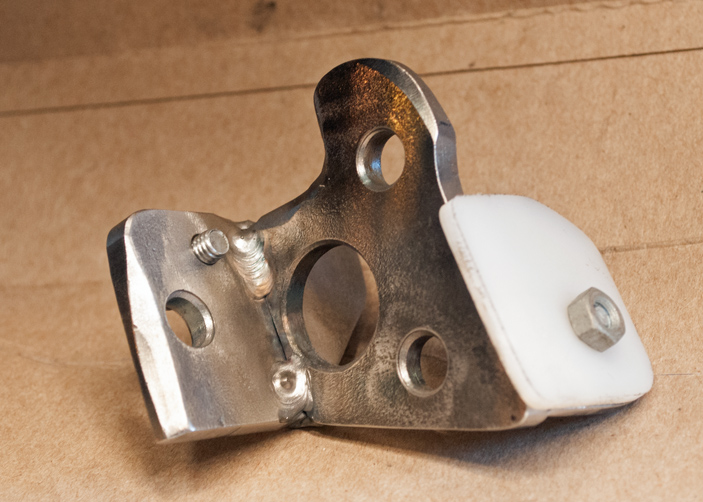
I just finished, other than paint (it is too windy outside right now),
a more elaborate stop that should eliminate that issue. I had
some bits of .25" HR steel plate on hand that I used along with a piece
of .125" angle and some .125" UHMW-PE sheet.
I'd noticed there were some 6 mm fixturing holes in the lower damper
mount plates so I shaped and tapped a piece of plate to be clamped to
the underside of the mount, then welded a vertical piece of plate to
that. The bottom of that (with the plastic underneath) is what
contacts the reinforcing rib on the stand so all loads are fed through
those plates straight into the frame plate. The bolt only acts to
keep the stop from falling on the ground when the stand is down, the
rest of the time the stop is held in place by the stand. The
retaining screw for the pivot shaft is not used to retain the stop.
I drilled a couple of token lightening holes, and the big one is so the
pivot bolt for the suspension rocker can be accessed without removing
the stop.
It no doubt is overkill but I think it should be bulletproof (though a bit on the heavy side).
If anyone wants to base their own home-brew stop on what I came up with be my guest.
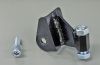 Japanese center stand stop
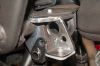
My stop in place on the bike
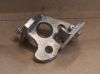
My stop, various views #1
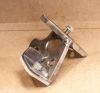
My stop, various views #2
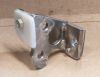
My stop, various views #3
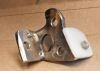
My stop, various views #4
January 2018
I
made some progress on the project recently. The bike is currently
sitting with the suspension collapsed and I made 45 degree lean angle
gauges that are bolted to the frame to make it easier to stay within
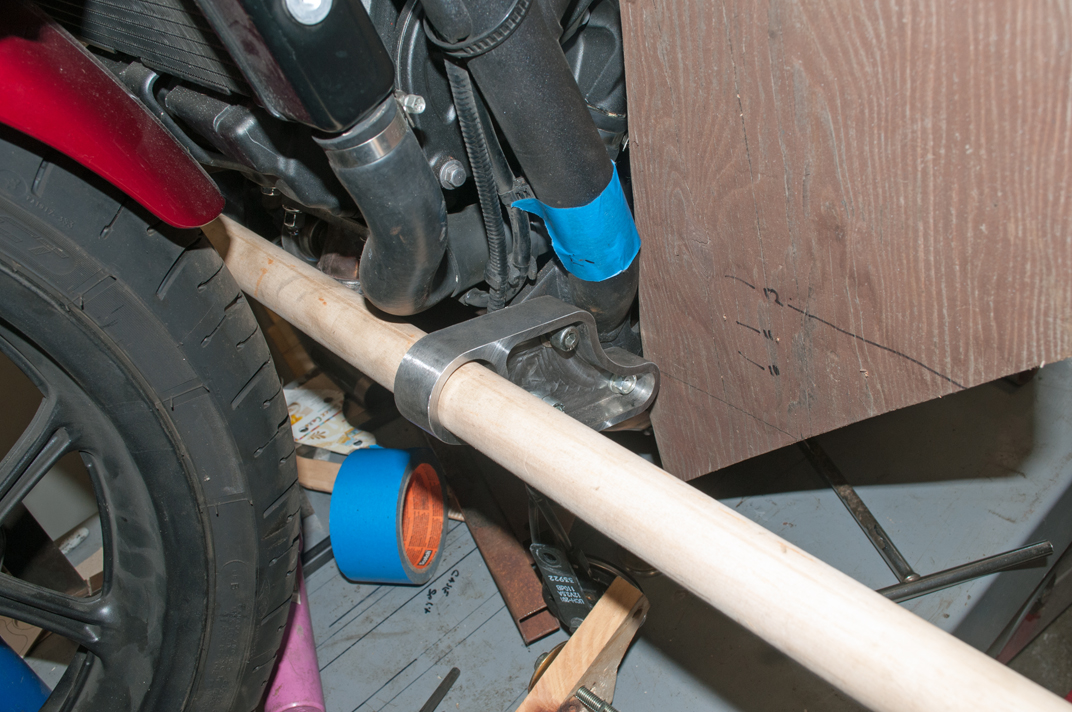
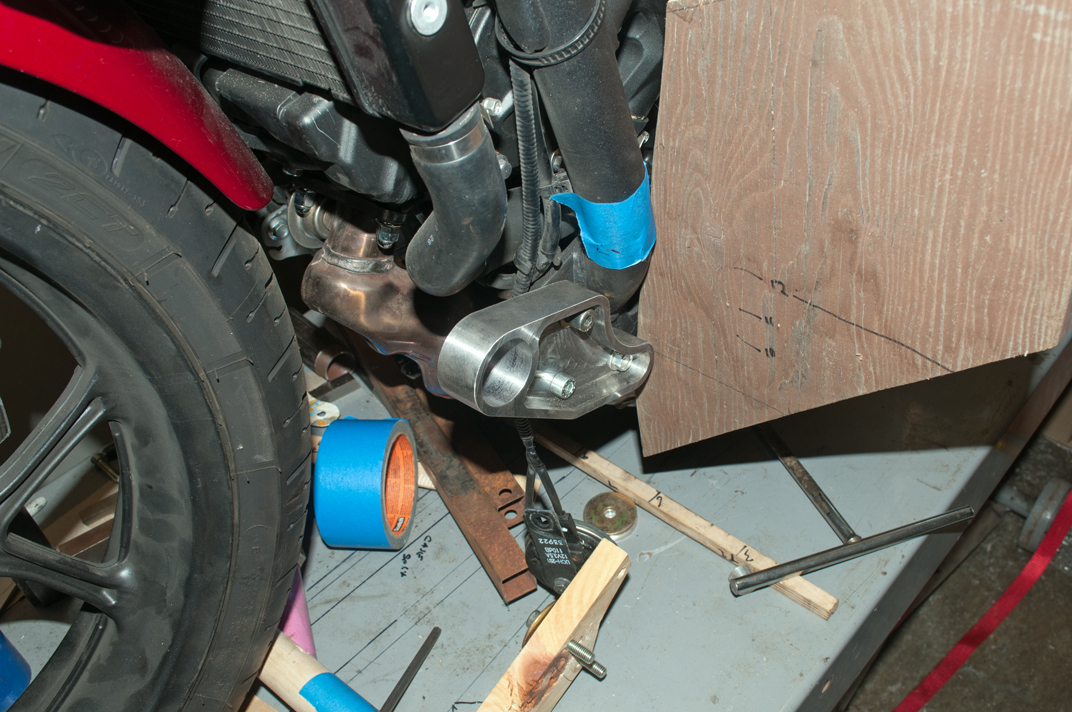
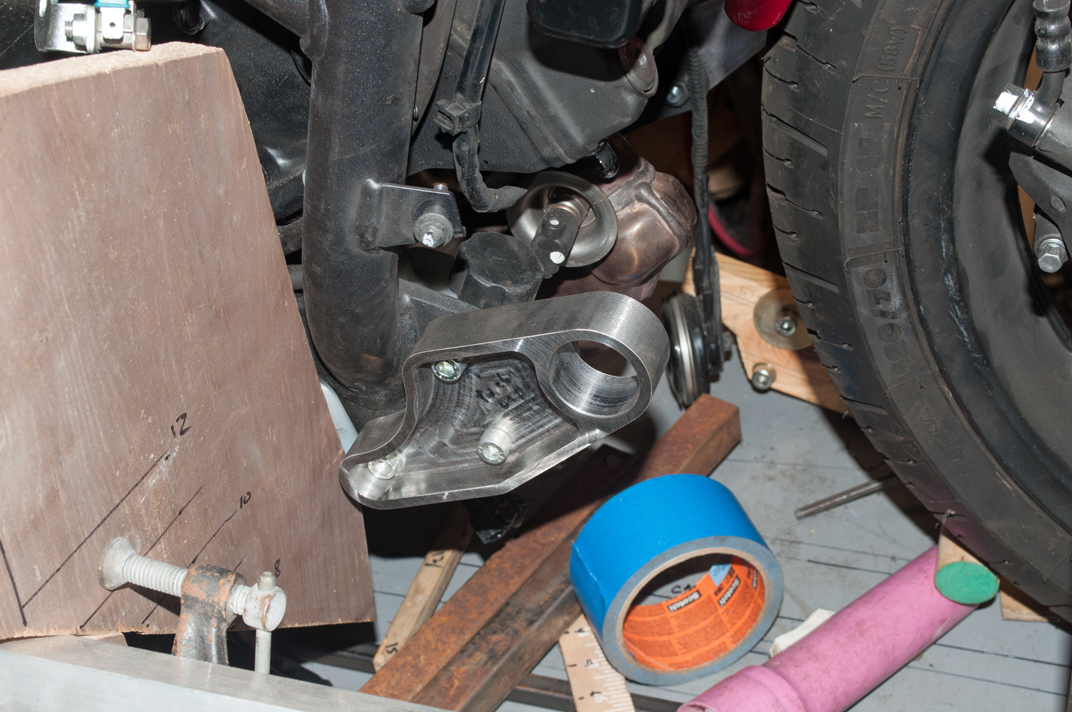
those boundaries. I've machined the base mounts for the footbox
subframe which bolt on to the plates at the bottom of the front down
tubes, which is where the lower engine mount and the OEM footpegs
attach. I intend for the footboxes to provide a reasonable amount
of protection for the rider's feet so the mounting plates are made with
strength, not elegant lightness, as the goal since they will be the
main attachment to the frame.
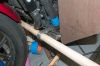 Left
footbox mounting plate. The plate is sized for 1.375" tube, the dowel
shown is 1.25" diameter. The 45 degree lean angle gauge is visible and
the front suspension is compressed.
Left
footbox mounting plate. The plate is sized for 1.375" tube, the dowel
shown is 1.25" diameter. The 45 degree lean angle gauge is visible and
the front suspension is compressed.
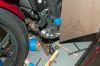 Left
footbox mounting plate. The 45 degree lean angle gauge is visible and the front
suspension is compressed.
Left
footbox mounting plate. The 45 degree lean angle gauge is visible and the front
suspension is compressed.
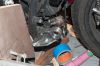 Right
footbox mounting plate. The 45 degree lean angle gauge is visible and the front
suspension is compressed. That is the catalytic convertor behind it.
Right
footbox mounting plate. The 45 degree lean angle gauge is visible and the front
suspension is compressed. That is the catalytic convertor behind it.
Peter Verdone's CTX700 project Peter has been improving his CTX700 and documenting the changes on his website. It is well worth reading.
Back to the home page
http://www.eurospares.com/HondaCTX700.htm
©
2017-2018 Michael Moore, last update for this page 28 October 2018
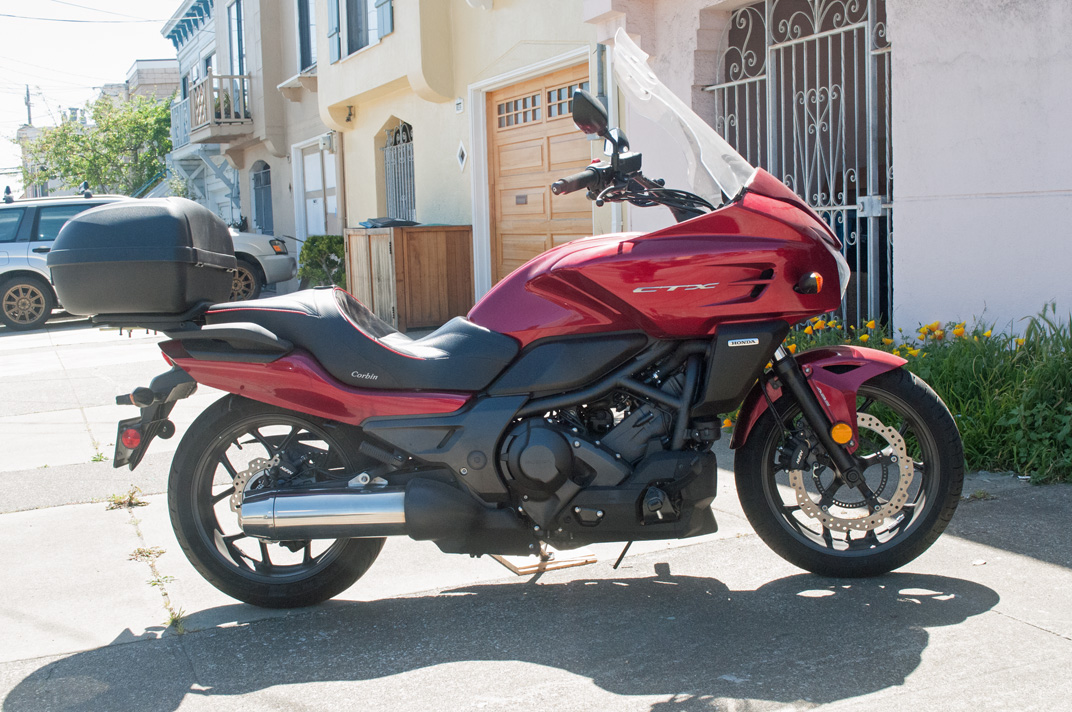 My
CTX 700 as purchased
My
CTX 700 as purchased