|
 In
early 1984 first trials were carried out at the Goodwood race
circuit with very encouraging results. The two test riders, (Mottod
bosses Phil & Martin), felt very happy with their new toys setting
the two fastest times of the day but as Nigel watched from trackside
he became aware of the front-ends jerky response to bumps and
depressions in the tracks surface. Upon listening to Nigel's observations
the riders were unable to report handling consistent with his
views. Convinced he was correct, Nigel set about finding the cause
of this jerky behaviour, now known as fork stiction. In
early 1984 first trials were carried out at the Goodwood race
circuit with very encouraging results. The two test riders, (Mottod
bosses Phil & Martin), felt very happy with their new toys setting
the two fastest times of the day but as Nigel watched from trackside
he became aware of the front-ends jerky response to bumps and
depressions in the tracks surface. Upon listening to Nigel's observations
the riders were unable to report handling consistent with his
views. Convinced he was correct, Nigel set about finding the cause
of this jerky behaviour, now known as fork stiction.
After a great
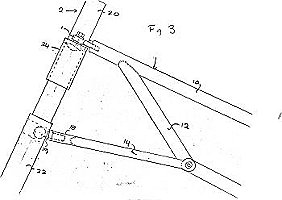
deal of thought Nigel was convinced that the Saxtrak system actually
increased stiction compared with conventional forks due to the
proximity of the top slider plain bearing to the steering ball
joint situated just above the front wheel, this caused a tremendous
leverage fore and aft of the top slider bearing resulting in pressure
between slider and stanchion high enough to squeeze out the oil
that should be lubricating the forks.
Only two solutions
occurred to us, one was to produce much longer sliders which resulted
in the top bearing moving up and away from the steering pivot
point dramatically reducing the leverage and therefore the pressure,
(BMW have used this approach). Nigel soon dismissed this solution
because of the increased unsprung weight, the increased overall
length of the forks, and reduced rigidity due to a combination
of the need to restrict the depth of the top yoke and the overall
length of the whole system. (Saxon top yokes are 80mm deep which
when allied to a pair of short 40mm diam. stanchions results in
a very torsionally stiff front-end essential for good handling.)
|

 Saxon's
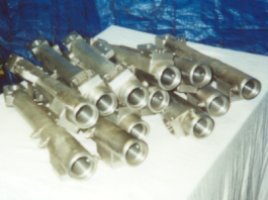
solution was to increase the length of the slider casting approx.
50mm and fit a recirculating linear ball bearing in place of the
plain bearing previously fitted, although this did require the
fitting of hardened stanchions to prevent indenting caused by
the ball bearings. This solution worked perfectly for some years
until Nigel decided to employ a pumped oil system to lubricate
the now plain bearings much as a crankshaft is. This idea cured
stiction and corrosion problems at a stroke and is still used
today.
Saxon's
solution was to increase the length of the slider casting approx.
50mm and fit a recirculating linear ball bearing in place of the
plain bearing previously fitted, although this did require the
fitting of hardened stanchions to prevent indenting caused by
the ball bearings. This solution worked perfectly for some years
until Nigel decided to employ a pumped oil system to lubricate
the now plain bearings much as a crankshaft is. This idea cured
stiction and corrosion problems at a stroke and is still used
today.